It happens exactly the same way every night. I open my eyes, glance at the clock glowing in the dark, and see those familiar red numbers: 3:14 AM.
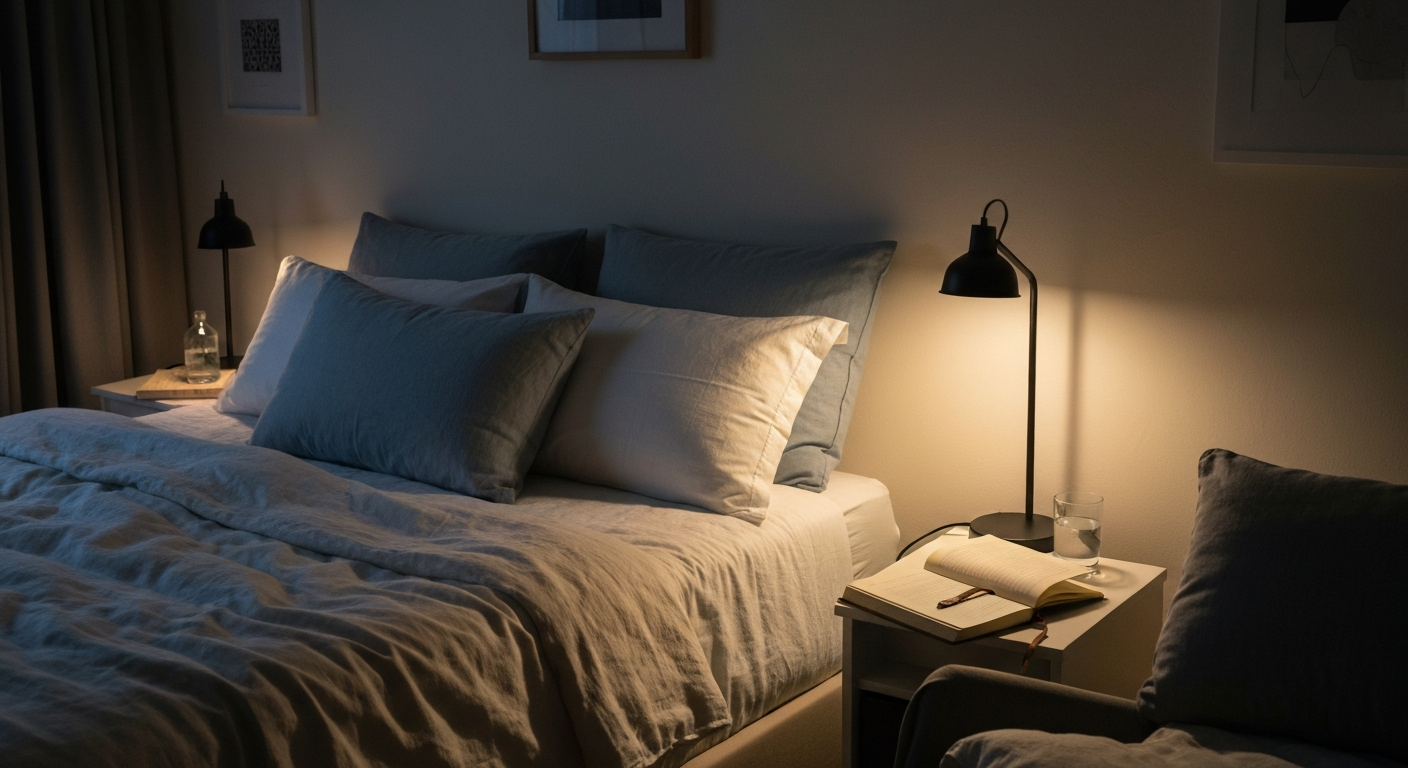
My heart is usually racing a little, my mind is already cataloging everything I forgot to do yesterday, and my body feels like it's vibrating. The worst part? I'm absolutely exhausted, but my brain has seemingly decided it's time to run a marathon. I lie there, bargaining with the universe for just two more hours of sleep, calculating how tired I'm going to be for tomorrow's meetings, and feeling a rising tide of anxiety.
If you're in the "3 AM Club," please know you aren't imagining it, and you most certainly aren't alone. It is one of the most common—and infuriating—symptoms of the midlife shift. We spend our 20s and 30s sleeping like rocks (or at least, recovering quickly when we don't), only to hit our mid-40s and discover that sleep has become a delicate, elusive art form.
The Biology of the 3 AM Wake-Up Call
Let’s get one thing straight: you are not doing anything wrong. You aren't lacking willpower, and you haven't suddenly forgotten how to sleep. What you are experiencing is a profound biological shift. During peri-menopause and menopause, our hormones embark on a chaotic rollercoaster ride, and sleep is often the first casualty.
To understand why 3 AM is the magic number, we have to look at the delicate dance between four key players in our body: estrogen, progesterone, melatonin, and cortisol.
1. The Progesterone Plunge
Progesterone is our body's natural "chill out" hormone. It has a deeply calming, sedative effect on the brain. It stimulates the production of GABA, a neurotransmitter that helps us relax and fall asleep. As we enter peri-menopause, progesterone is often the first hormone to drop, and it doesn't just taper off gently; it plummets. Without our natural relaxant, our nervous system becomes hyper-vigilant. We become lighter sleepers, easily rousable by a partner's snore, a dog shifting, or even just a change in room temperature.
2. Estrogen Erraticism and Temperature Control
Estrogen helps regulate our body temperature. It acts like the thermostat in our brain. When estrogen levels fluctuate wildly, our thermostat breaks. The brain suddenly thinks we are overheating and triggers a massive cooling response: vasodilation (flushing), sweating, and a spike in heart rate. Hello, night sweats. Even if you don't wake up drenched in sweat, these micro-fluctuations in body temperature are enough to pull you out of deep sleep and into wakefulness right around the 3 AM mark.
3. The Cortisol Spike
Cortisol is our stress hormone, but it's also our "wake up" hormone. In a normal circadian rhythm, cortisol levels drop to their lowest point around midnight and begin to slowly rise around 3 or 4 AM to prepare us to wake up at 7 AM. However, when our estrogen and progesterone are low, our bodies become more sensitive to stress. Blood sugar dips during the night can trigger a premature, massive spike in cortisol. Your body essentially hits the panic button at 3 AM, dumping adrenaline into your system. That’s why you wake up with your heart pounding and your mind racing.
4. Melatonin Decline
To add insult to injury, as we age, our natural production of melatonin (the sleep hormone) decreases. We simply don't have the same sleep drive we used to.
"Understanding the biology was a turning point for me. It took the blame away. I wasn't 'bad at sleeping'—my body was just operating with a new, confusing set of instructions."
The Psychological Toll of Sleep Deprivation
We cannot talk about the 3 AM wake-ups without acknowledging the deep psychological toll they take. Sleep deprivation in midlife is a thief. It steals our patience, our focus, our joy, and our sense of self.
When you are chronically sleep-deprived, everything feels heavier. Brain fog rolls in thick and fast. You might find yourself staring blankly at your computer screen, unable to recall the word for "spatula," or snapping at your loved ones over minor inconveniences. The exhaustion seeps into your bones, making the idea of exercising or socializing feel like climbing Everest.
And then there is the anxiety of the night itself. The bed, which used to be a sanctuary, becomes a battleground. As evening approaches, you might start feeling a sense of dread. "Will I sleep tonight? What if I wake up again? How will I function tomorrow?" This sleep anxiety creates a self-fulfilling prophecy, keeping your nervous system on high alert and making it even harder to rest.
The Deep Sleep Stack
I tried every tea, tincture, and old wives' tale out there. Here is the exact, curated combination of tools that finally helped me calm my nervous system, regulate my temperature, and sleep through the night again. I honestly don't travel without these.
Magnesium is the relaxation mineral, but the type matters heavily. Citrate will make you run to the bathroom, but Glycinate crosses the blood-brain barrier to actively calm the nervous system. I take this 45 minutes before bed, and it feels like a gentle, heavy blanket for my racing mind.
Deep pressure therapy tells your autonomic nervous system to rest. But standard weighted blankets caused massive night sweats for me. This specific cooling version uses bamboo fabric and glass beads. It stops the tossing and turning without trapping heat.
When I wake up at 3 AM and the anxiety spikes, I don't try to force sleep. I put on my sleep headphones and play a 20-minute Yoga Nidra track. It gives my brain a specific, boring task (focusing on body parts) which short-circuits the cortisol spike.
*I only recommend products I personally use, love, and have vetted. If you purchase through these links, I may earn a small commission at no extra cost to you, which helps keep this site running.
What to Do When You Wake Up at 3 AM (The Action Plan)
Okay, so it's happened. It's 3:14 AM, your eyes are wide open, and your brain is reminding you of an embarrassing thing you said in 2014. What do you actually do in the moment?
1. The 20-Minute Rule
If you have been awake for more than 20 minutes, get out of bed. Lying there tossing, turning, and getting frustrated trains your brain to associate your bed with stress and wakefulness. Get up, keep the lights extremely dim (use a small amber nightlight), and go to a different room.
2. Zero Screens. Absolutely Zero.
First rule: Do not look at your phone. Seriously. Do not check emails, do not scroll social media, do not look at the news. The blue light emitted by screens suppresses whatever melatonin you have left and signals to your brain that the sun is up. If you need to check the time, use an old-school analog clock.
3. Do Something Incredibly Boring
The goal is to distract your mind without stimulating it. Read a physical book (preferably non-fiction or something slightly dry—now is not the time for a gripping thriller). Fold laundry in dim light. Do a jigsaw puzzle. Listen to a podcast about history on a low volume.
4. The "Brain Dump" Journal
If your wake-up is driven by anxiety or a racing to-do list, keep a notebook and pen next to your bed. Write it all down. Get the thoughts out of your head and onto the paper. Tell your brain, "I have recorded this. We don't need to hold onto it until morning. We will deal with it tomorrow."
5. Somatic Grounding
When cortisol spikes, you need to manually override your nervous system. Try the 4-7-8 breathing technique: Inhale quietly through your nose for 4 seconds, hold your breath for 7 seconds, and exhale completely through your mouth, making a whoosh sound, for 8 seconds. Repeat this cycle four times. It acts as a natural tranquilizer for the nervous system.
Daytime Habits That Prevent Nighttime Wake-Ups
Fixing the 3 AM wake-up doesn't start at 3 AM; it starts the moment you wake up the previous morning. Our circadian rhythm is a 24-hour cycle, and what we do during the day directly impacts how we sleep at night.
- Morning Sunlight: Get outside within 30 minutes of waking up. Sunlight hitting your eyes halts melatonin production and sets your circadian clock, ensuring that melatonin will be released at the right time later that evening.
- Manage the Caffeine Window: As we age, our liver processes caffeine more slowly. That 3 PM coffee might still be circulating in your bloodstream at midnight. Try to cut off all caffeine by 12 PM or 1 PM at the latest.
- The Blood Sugar Balance: Remember that cortisol spike we talked about? It's often triggered by a drop in blood sugar. Ensure you are eating enough protein and healthy fats during the day, especially at dinner. A tiny, protein-rich snack before bed (like a spoonful of almond butter or a slice of turkey) can keep your blood sugar stable through the night.
- Alcohol is Not a Sleep Aid: A glass of wine might help you fall asleep faster because it's a depressant, but it destroys your sleep architecture. As the alcohol wears off in the middle of the night, it causes a rebound effect, leading to fragmented sleep, night sweats, and—you guessed it—waking up at 3 AM.
When to Seek Professional Help
While lifestyle changes and the right tools can work miracles, sometimes we need more support. If you have tried the sleep hygiene protocols, optimized your supplements, and you are still suffering from chronic insomnia that impacts your daily functioning, it is time to talk to a medical professional.
Consider seeking out a menopause-certified practitioner (NAMS certified in the US, or BMS certified in the UK). They can evaluate whether Hormone Replacement Therapy (HRT) or Body Identical Hormones might be appropriate for you. For many women, restoring estrogen and progesterone levels is the missing puzzle piece that finally brings deep, restorative sleep back into their lives. You don't have to white-knuckle your way through this.
Finding Grace in the Middle of the Night
Perhaps the most important shift I made wasn't a supplement or a blanket; it was a shift in mindset. I stopped fighting the 3 AM wake-ups. I stopped judging myself for them.
When I wake up now, I don't panic. I take a deep breath. I remind myself that my body is going through a profound transition. I extend the same grace to myself that I would to a friend. I get up, I make a cup of chamomile tea, I read my book by a dim light, and I trust that sleep will eventually return. And if it doesn't? I trust that I will survive the next day, just like I have survived 100% of my bad days before.
You are navigating a massive physiological shift. Be gentle with yourself. The sleep will come back. You will feel like yourself again. Until then, we are in this together.
Want my complete sleep routine?
Drop your email below and I'll send you my free, comprehensive PDF guide: 'The Midlife Sleep Reset.' It includes the exact morning habits, evening routines, and vetted tools I use to protect my peace and sleep soundly.
No spam, ever. Just honest midlife support delivered to your inbox.
Looking for tools that actually help?
I've curated a collection of products and resources specifically for this stage of your midlife journey.
Explore the Midlife ShopShare this article