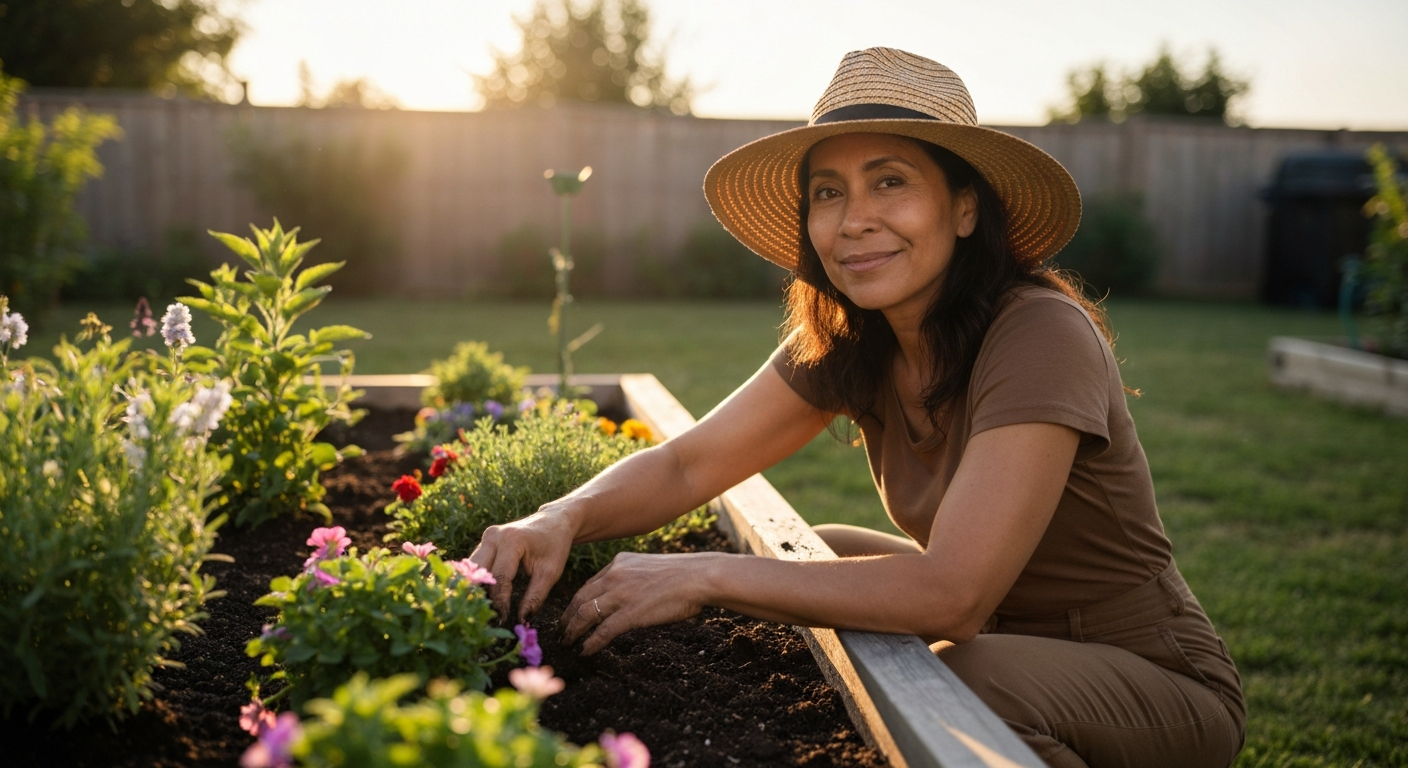
There is a running joke on the internet that at some point in your late forties or early fifties, a switch flips in your brain and you suddenly become obsessed with birds, sourdough, or gardening. But when it comes to getting our hands in the dirt, there is so much more happening than just a new hobby. It is profound midlife therapy.
The Sudden Urge to Dig in the Dirt
If you have recently found yourself wandering the aisles of your local garden center on a Saturday morning, mesmerized by the hydrangeas and debating whether you have the right sunlight for a raised vegetable bed, you are not alone.
For decades, we have poured our nurturing energy into other people. We raised children, managed households, built careers, and supported aging parents. We spent years in the "hustle" phase of life, where everything moved fast, and productivity was the ultimate currency.
But as we step into peri-menopause and menopause, the hustle starts to feel less like an achievement and more like an assault on our nervous systems. The brain fog rolls in, the sleep disruptions leave us exhausted, and the anxiety—oh, the sudden, unexplainable midlife anxiety—makes us crave something still. Something grounded.
Enter the garden.
Why Gardening is the Ultimate Nervous System Reset
There is a reason you feel a physical sense of relief when you step outside and start pulling weeds or watering your tomatoes. It isn't just in your head; it is deeply biological.
When our hormones are fluctuating wildly during menopause, our cortisol (the stress hormone) often spikes. We feel a constant hum of low-grade panic. Gardening forces us to slow down to the rhythm of nature. You cannot rush a seed. You cannot life-hack a tomato into ripening faster. It demands patience, presence, and surrender—three things midlife women desperately need to practice.
Furthermore, there is actual science behind the "happy dirt" phenomenon. Soil contains a harmless bacteria called Mycobacterium vaccae. When we get our hands in the soil, this bacteria stimulates serotonin production in our brains—the exact neurotransmitter that helps regulate mood, ease anxiety, and make us feel happier and more relaxed. Nature literally provided us with a built-in, dirt-based antidepressant.
Finding Control When Your Body Feels Out of Control
I certainly know that one of the hardest parts of the midlife transition is the feeling that our bodies have betrayed us. The sudden weight gain around the middle, the hot flashes that strike in the middle of a meeting, the joints that suddenly ache can truely feel like you are a passenger in a vehicle you no longer know how to drive.
A garden offers a beautiful counter-narrative. It is a space where you have agency. You decide what goes where. You prune away the dead weight (a beautiful metaphor for this season of life, isn't it?). You nourish the soil, and in return, the soil gives you a tangible, beautiful result. It is a gentle reminder that with the right care, water, and sunlight, beautiful things are still growing. You are still growing.
Nurturing Something That Doesn't Talk Back
I say this with all the love in the world for my family: sometimes, it is just really nice to care for something that doesn't need to be driven to soccer practice, doesn't complain about what's for dinner, and doesn't ask you where its socks are.
Plants are quiet companions. They ask for water, light, and a little bit of food, and in return, they bloom. They offer a quiet, meditative space where you can just be. Many women I speak to describe their morning garden walks—coffee in hand, inspecting new buds and checking the soil—as the most sacred 15 minutes of their day. It is a time before the world demands anything of them.
The Art of Connection Through Cuttings
We talk a lot about the loneliness of midlife. As our social circles shift, making new friends can feel daunting. But the gardening community is arguably one of the most generous, welcoming spaces you can enter.
Gardeners love to share. They share advice, they share seeds, and they share cuttings. A simple compliment about a neighbor's rose bush can lead to a half-hour conversation over the fence and a new friendship. Joining a local community garden or even a local Facebook gardening group opens the door to connect with other women who are in the exact same season of life, both literally and metaphorically.
It bypasses the awkward small talk. You don't have to explain your resume or your life story; you just have to ask, "How do you keep the slugs off your hostas?"
How to Start (Without Overwhelming Yourself)
If you are feeling the pull to start growing things, the biggest mistake you can make is going to the garden center and buying one of everything. (Ask me how I know). Midlife is about simplifying, not adding more chores to your list.
1. Start Small and Contained
You do not need to till up your entire backyard. Start with three terracotta pots on your patio or a single raised bed. Container gardening is incredibly forgiving, requires less weeding, and is much easier on the back and knees.
2. Grow What Brings You Joy
Don't plant radishes if you hate radishes just because they are easy to grow. If you love the smell of fresh herbs, start a little culinary herb garden near your kitchen door—basil, mint, and rosemary are incredibly resilient. If you want to cut fresh flowers for your kitchen table, throw some zinnia seeds in the dirt; they are the most joyful, low-maintenance flowers you can grow.
3. Embrace the Mistakes
You are going to kill a plant. Probably several. It is a rite of passage. Do not let a wilted fern convince you that you have a "black thumb." Gardening is a practice of observation and adjustment. If a plant isn't thriving, move it. If it dies, compost it and try again next season.
A New Season of Growth
As we navigate the messy, profound, and often exhausting transition of peri-menopause and menopause, we need soft places to land. We need hobbies that don't require a screen, a Wi-Fi connection, or a performance.
Getting your hands in the dirt is a way of coming home to yourself. It is a reminder that there are seasons for blooming, seasons for shedding leaves, and seasons for resting under the frost. You are right where you need to be.
Ready to start your own healing garden?
If you want to experience the calm of gardening but feel completely overwhelmed by soil types, planting zones, and when to water, I highly recommend checking out this step-by-step beginner's gardening program. It takes all the guesswork out of starting your first beautiful, thriving garden.
Explore Gardening Courses in the Gift ShopTransparency note: The link above directs you to the Midlife Gift Shop, where some of the recommendations may be affiliate links. I only share resources that I truly believe will bring joy and ease to your midlife journey.
Looking for tools that actually help?
I've curated a collection of products and resources specifically for this stage of your midlife journey.
Explore the Midlife ShopShare this article