If you've tried the magnesium, the blackout curtains, and the cool room temperature, but you're still staring at the ceiling at 3 AM, it might be time to look outside the typical Western toolkit. For many midlife women, Chinese acupuncture has become the unexpected key to finally getting a full night's rest during menopause.
The Midlife Sleep Crisis
During perimenopause and menopause, our bodies go through a massive hormonal shift. Estrogen and progesterone drop, which doesn't just cause hot flashes—it fundamentally alters our sleep architecture. You might find it hard to fall asleep, or more commonly, you wake up in the middle of the night and simply cannot turn your brain off.
While hormone replacement therapy (HRT) and lifestyle changes are fantastic, sometimes the nervous system needs a different kind of reset. That is where Traditional Chinese Medicine (TCM) and acupuncture come in.
How Acupuncture Actually Works for Sleep
From a Western perspective, acupuncture stimulates the nervous system to release endorphins and other neurochemicals. It shifts the body from a sympathetic state (fight or flight) to a parasympathetic state (rest and digest).
From a TCM perspective, menopausal insomnia is often viewed as an imbalance of "Yin" and "Yang." As we age, our cooling, calming Yin energy depletes, allowing the fiery, active Yang energy to rise—resulting in night sweats, anxiety, and wakefulness. Acupuncture helps clear that excess heat and nourish the Yin, grounding your energy so you can actually sleep.
What to Expect at Your First Session
If you've never had acupuncture, the idea of needles might sound anything but relaxing. But these needles are hair-thin. Most women feel a tiny tap, followed by a deep sense of heaviness or warmth.
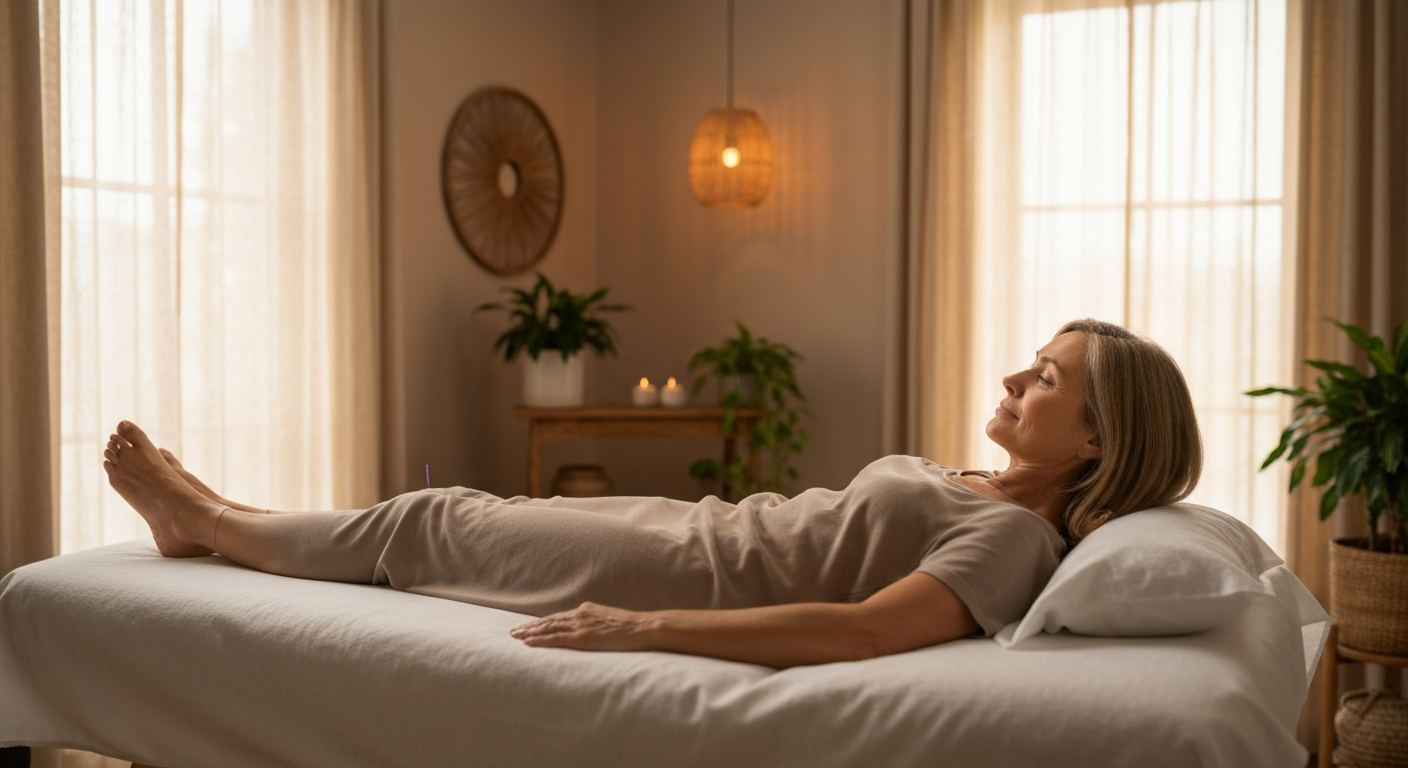
A good practitioner will spend a lot of time asking about your digestion, your stress levels, and even look at your tongue and feel your pulse. The treatment is deeply personalized. Once the needles are placed, you'll rest in a quiet, softly lit room for about 20 to 30 minutes. It is incredibly common to fall into a deep, restorative "acu-nap" right on the table.
Making It Part of Your Routine
Acupuncture isn't a one-hit wonder. While you might sleep better the very first night, it usually takes a series of sessions (often weekly for a month or two) to retrain your nervous system.
Many women find that pairing acupuncture with targeted Chinese herbs (prescribed by a licensed practitioner) creates a powerful combination for managing menopausal symptoms without relying on sleep medications.
Finding a Practitioner
Look for a licensed acupuncturist (L.Ac) who specializes in women's health or menopause. Don't be afraid to ask about their experience treating sleep disruption during this specific stage of life.
Rest Is Possible
You do not have to accept exhaustion as your new normal. Exploring alternative therapies like acupuncture might just be the gentle, holistic support your body is asking for right now.
Want more sleep solutions?
Download my free 'Midlife Sleep Toolkit' for a checklist of natural remedies, routines, and habits that actually help you sleep through the night.
No spam, ever. Just honest midlife support delivered to your inbox.
Looking for tools that actually help?
I've curated a collection of products and resources specifically for this stage of your midlife journey.
Explore the Midlife ShopShare this article